
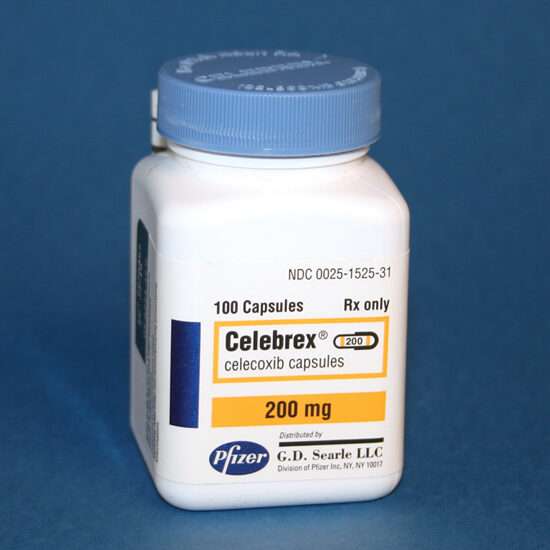
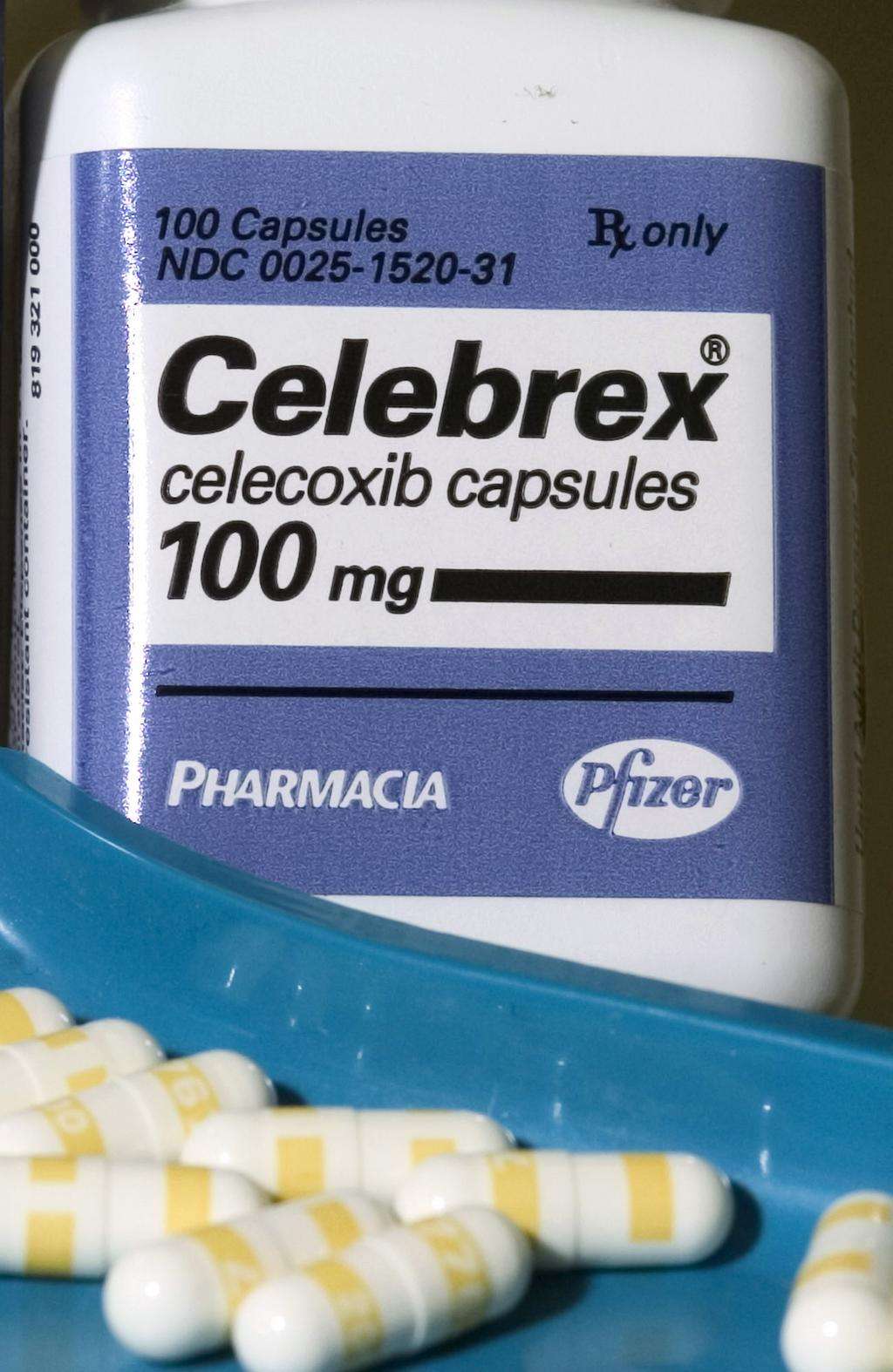
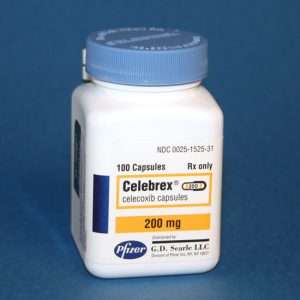
Celebrex 100 Capsules, 200 Capsules, 300 Capsules, – 100mg, 200mg
What is Celebrex (Celecoxib)?
Celebrex is a prescription non-steroidal anti-inflammatory drug (NSAID) used to manage inflammation and pain caused by conditions such as arthritis, ankylosing spondylitis, and menstrual cramps.
How Does Celebrex Work?
Celebrex also selectively blocks one of the enzymes in the body that makes prostaglandins. Prostaglandins are like hormones, and they cause damaged tissue to swell. They also increase pain sensations in the area where they are released. By blocking prostaglandin formation, Celebrex reduces swelling and pain. NSAIDs as a drug class increase the risk of developing stomach ulcers. Celebrex is different because it only blocks a specific prostaglandin-producing enzyme called Cox-2. By only blocking the Cox-2 enzyme, Celebrex lowers the risk of developing stomach ulcers.
Indications
Celebrexis indicated for the following conditions
- Osteoarthritis
- Rheumatoid arthritis
- Juvenile rheumatoid arthritis (for patients one year of age or older)
- Ankylosing spondylitis
- Acute pain
- Primary dysmenorrhea
- Familial adenomatous polyposis (off-label use)
Dosage
Celebrex should be used at the lowest effective dose and for the shortest possible time, which is still clinically effective.
- Osteoarthritis – 200 mg daily, or 100 mg twice a day.
- Acute pain – 400 mg as the first dose, then 200 mg 12 hours later if needed. Then take 200 mg twice a day as needed.
- Primary dysmenorrhea – 400 mg as the first dose, then 200 mg 12 hours later if needed. Then take 200 mg twice a day as needed.
- Rheumatoid arthritis – 100 to 200 mg taken twice daily.
- Juvenile rheumatoid arthritis – 50 mg twice daily if the patient weighs 10 – 25 kg. 100 mg twice daily if the patient weighs more than 25 kg.
- Ankylosing spondylitis – 200 mg taken once daily, or 100 mg taken twice a day. If there is no effect after six weeks, a trial of 400 mg may be of benefit.
- Familial adenomatous polyposis – 400 mg taken twice daily with food.
- In patients with moderate liver impairment (Child-Pugh Class B), consider reducing the dose by 50%.
In patients who are known, or suspected to be poor CYP2C9 metabolizers, consider reducing the dose by 50%.
Warnings & Precaution
Cardiovascular and thrombotic events
The chronic use of Celebrex is associated with severe cardiovascular and thrombotic events. Also, studies have reported an increase in heart attacks, stroke, and death. This risk is greater in patients with a history of cardiovascular disease or who are currently on treatment for cardiovascular disease. Using aspirin with Celebrex does not seem to mitigate this risk. Use the lowest effective dose for the shortest duration possible, especially in patients with cardiovascular risk factors.
Hypertension
Celebrex may cause new hypertension or the worsening of preexisting hypertension. Celebrex may also impair the function of antihypertensive agents such as thiazides or loop diuretics. Therefore, patients taking Celebrex should be carefully monitored for the development of hypertension, and their blood pressure should be monitored throughout their therapy.
Congestive cardiac failure and edema
Some patients taking Celebrex have been shown to develop fluid retention and peripheral edema. Therefore, patients with congestive cardiac failure should be carefully monitored when on CELEBREX.
Gastrointestinal bleeding, ulcers, and perforation
Celebrex also increases the risk of having bleeding, ulceration, and perforation of the stomach, small intestine, or large intestine. These complications may occur at any time and may be fatal. In some cases, there may be no warning symptoms. When prescribing Celebrexfor patients with a prior history of gastrointestinal bleeds, ulcers, or perforations, extreme care should be taken. Patients who smoke, use oral corticosteroids, blood thinners, or alcohol are at greater risk of these complications. Elderly patients are at a significantly higher risk when taking CELEBREX. To minimize these complications, Celebrexshould be used at the lowest possible dose and for the shortest duration that still achieves the desired clinical goals.
Hepatic effects
Celebrexmay cause elevated liver enzymes in 15% of patients taking the medication. Rarely, cases of severe liver failure or liver necrosis have been reported. Patients who develop symptoms or signs of liver failure or elevations in liver enzymes should be carefully monitored. If ongoing systemic signs or symptoms of liver dysfunction persist, Celebrex should be stopped.
Renal effects
Also taking Celebrex for extended periods may cause papillary necrosis of the kidney and other renal damage. Patients at greatest risk of these complications are those with preexisting renal dysfunction, cardiac failure, hepatic dysfunction, and those taking ACE-inhibitors, angiotensin II receptor antagonists, diuretics, and the elderly.
Anaphylactoid reactions
Celebrex may cause acute general anaphylactoid reactions in patients who have not previously been exposed to the medication. These seem to be more common in asthmatic patients with rhinitis or a previous history of severe bronchospasm after taking aspirin.
Skin reactions
Celebrex contains sulfonamides and may cause severe skin reactions like Stevens-Johnson Syndrome. Celebrex should be stopped at the first sign of a skin rash.
Corticosteroid replacement
Celebrex should not be used as a substitute for corticosteroids. Celebrex cannot treat corticosteroid deficiency.
Hematological effects
Patients taking Celebrex may develop anemia. Therefore, those on long-term Celebrex should have their hemoglobin checked periodically.
Preexisting asthma
Certain asthma patients who take aspirin experience a worsening of their symptoms. These patients are at greater risk of asthmatic complications if they use other NSAIDs. Therefore, do not start Celebrex in this subset of patients.
Special Populations
Hepatic impairment
Celebrex also should not be used in patients with severe liver failure or impairment (Child-Pugh Class C or higher). The dose of Celebrex should be reduced by 50% in patients with moderate liver impairment (Child-Pugh Class B).
Celebrex also may cause elevated liver enzymes in 15% of patients taking the medication. Rarely, cases of severe liver failure or liver necrosis have been reported. Patients who develop symptoms or signs of liver failure or elevations in liver enzymes should be carefully monitored. If ongoing systemic signs or symptoms of liver dysfunction persist, Celebrex should be stopped.
Renal impairment
And also aking Celebrex for extended periods may cause papillary necrosis of the kidney and other renal damage. Alos patients at greatest risk of these complications are those with preexisting renal dysfunction, cardiac failure, hepatic dysfunction, and those taking ACE-inhibitors, angiotensin II receptor antagonists, diuretics, and the elderly.
Celebrex is also not recommended in patients with advanced renal disease.
Children
Celebrex also has been approved for use in children 2 years and older diagnosed with Juvenile Rheumatoid Arthritis. However, the long-term impact of using Celebrexin this population is unclear.
Pregnancy
Celebrex also should not be used in late pregnancy, from 20 weeks of gestation onwards. Its use during this time may cause premature closure of the ductus arteriosus.
Breastfeeding
Celebrex is also secreted in breastmilk at low levels. The dose of Celebrex the nursing infant receives is approximately 1% of the usual dose for a two-year-old child. Care should be taken when giving Celebrex to a nursing mother.
Use in the elderly
Celebrex was also used in pre-approval trials that included patients over 65 years of age without any significant difference in clinical effect. However, post-marketing reports have found a greater risk of renal failure and gastrointestinal bleeding in this population group.
Poor CYP2C9 metabolizers
Patients known or thought to be poor CYP2C9 metabolizers of medications such as warfarin or phenytoin should take Celebrex with great care. Start treatment at half the lowest recommended dose. In addition, consider using a different drug in patients with juvenile rheumatoid arthritis who are known to be poor metabolizers.
Contraindications
Also Celebrex is contraindicated in patients with known hypersensitivity to celecoxib or sulfonamides.
Patients with a history of asthma, rash, or other allergic-type reactions when taking aspirin or other NSAIDs should not take CELEBREX.
Celebrex should not be used immediately after surgery for coronary artery bypass grafting.
Side Effects
Common side effects of Celebrex include:
- Stomach pain
- Constipation
- Diarrhea
- Gas
- Heartburn
- Nausea
- Vomiting
- Dizziness
Less common but potentially more severe side effects include:
- Heart attack
- Stroke
- High blood pressure
- Heart failure
- Kidney problems
- Bleeding from the stomach and intestines
- Anemia
- Severe life-threatening skin reactions
- Liver dysfunction and possible failure
- Acute asthma attacks in those who already have asthma
Immediately seek emergency medical care if you experience any of the following symptoms:
- Shortness of breath
- Breathing trouble
- Chest pain
- Slurred speech
- Swelling of the face or throat
- Sudden weakness in one side of your body
If you have any of the following symptoms, stop CELEBREX and contact your healthcare provider immediately:
- Itching and your skin or eyes look yellow
- Stomach pain
- Vomiting of blood
- Blood in your stool or the stool looks black and like tar
- Skin rash or blisters with a fever
- Unusual weight gain with swelling of the arms or legs
Drug Interactions
Certain drugs may interact with CELEBREX. These include:
- Drugs metabolized by cytochrome P450 (CYP) 2C9
Warfarin
Lithium
Fluconazole - Aspirin
ACE inhibitors and angiotensin II antagonists - Furosemide
- Other NSAIDs
| Dosage | 100 Mg/ ml, 200 Mg/ml |
|---|---|
| Quantity | 100 PILLS, 200 PILLS, 300 PILLS |
Be the first to review “Celebrex 100 Capsules, 200 Capsules, 300 Capsules, – 100mg, 200mg”
Related products
Trulicity 0.75mg/0.5mL Injection (4-Pack) | Weekly Diabetes Treatment
Original price was: $418.$397.10Current price is: $397.10.

Apixaban 5mg – Blood Thinner for Stroke Prevention and Clot Treatment
Original price was: $65.$61.75Current price is: $61.75.Minocycline 50mg – Antibiotic for Acne, Infections, and More
Original price was: $29.$27.55Current price is: $27.55.Ulipristal Acetate – Buy Online for Emergency Contraception
Original price was: $41.$38.95Current price is: $38.95.


Reviews
There are no reviews yet.