
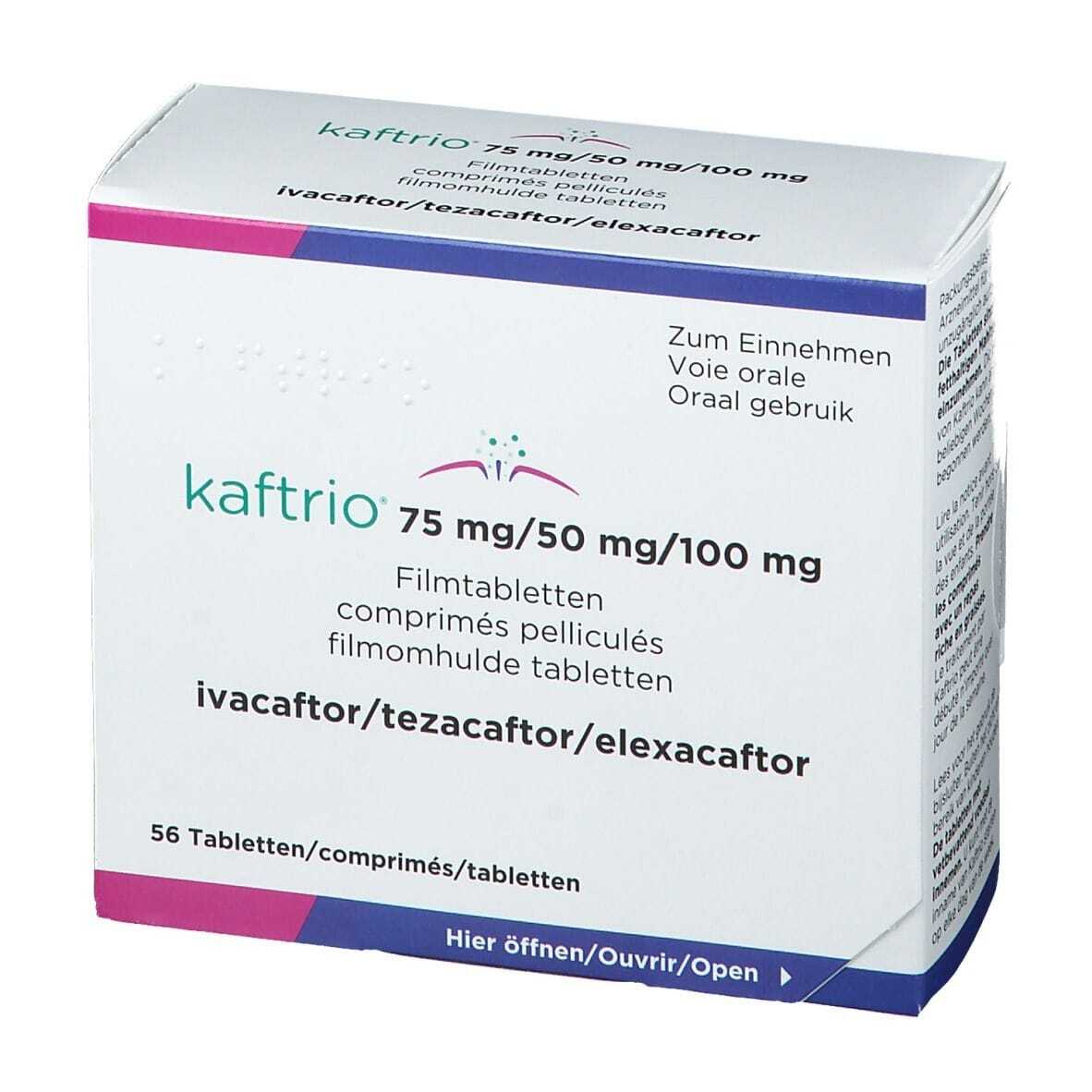



Kaftrio
Kaftrio is a prescription medicine used to treat cystic fibrosis (CF) in patients with specific genetic mutations. It combines three active ingredients—elexacaftor, tezacaftor, and ivacaftor—to help the CFTR protein function more effectively, improving lung function, reducing respiratory symptoms, and enhancing quality of life in eligible patients.
- Estimated Delivery : Up to 4 business days
- Free Shipping & Returns : On all orders over $200
Product Information:
Kaftrio is a prescription medicine used to treat cystic fibrosis (CF) — a genetic disorder that causes thick, sticky mucus in the lungs and digestive system. It contains three active drugs:
Ivacaftor
Tezacaftor
Elexacaftor
These work together to improve the function of the defective CFTR protein that causes CF.European Medicines Agency (EMA)+1
Who it’s for:
Patients aged 2 years and older with CF who have at least one responsive CFTR gene mutation (often the F508del mutation).European Medicines Agency (EMA)
How it works:
Tezacaftor and elexacaftor help more CFTR protein reach the cell surface.
Ivacaftor enhances the activity of the CFTR protein once it’s there.
This combination improves mucus clearance, lung function, and other CF symptoms.European Medicines Agency (EMA)
Uses:
Kaftrio is not a cure, but it targets the underlying cause of CF in people with specific gene mutations. Main benefits include:
Improved lung function
Fewer pulmonary exacerbations
Thinner mucus and easier breathing
It is intended as a long‑term treatment.
Dosage:
Important: Dosage must be tailored by a healthcare professional experienced in CF care
Typical dosing patterns:
Ages 6 years and older
Morning: Kaftrio tablets
Evening: (≈12 h later): Ivacaftor alone
Depending on weight and age, your doctor will prescribe the correct strength and quantity.Younger children (2–<6 years):
Kaftrio granules are available and mixed with soft food or milk; taken with a fat‑containing meal.
Key points about dosing:
Take with fat‑containing food to aid absorption.
Avoid grapefruit products during treatment (can increase side effects).
Dose adjustments:
May be needed if you’re on other medications that affect liver metabolism (CYP3A inhibitors).
In liver impairment, your doctor may change the dose.European Medicines Agency (EMA)
Side Effects:
Headache
Diarrhoea
Upper respiratory infections (nose/throat)
Rash
These are generally mild to moderate but tell your doctor if bothersomeLiver enzyme increases (should be monitored with periodic blood tests)
Elevated blood pressure
Cataracts (especially in children — eye checks may be recommended)
Psychological symptoms: anxiety, low mood, sleep disturbance, or changes in behaviour have been reported, though uncommon
Be the first to review “Kaftrio”
Related products
- Original price was: $70.$60Current price is: $60.

 $25,000
 $268
$268- $105




Reviews
There are no reviews yet.