
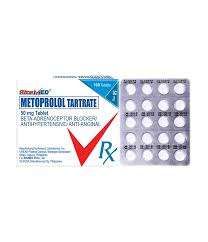
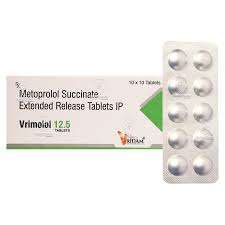
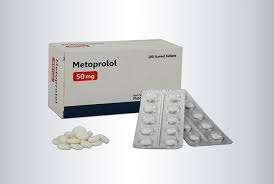
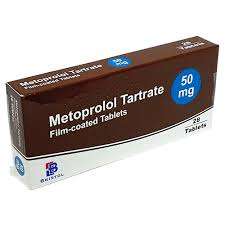
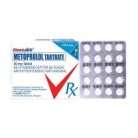
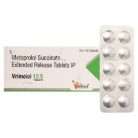
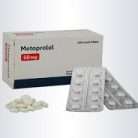
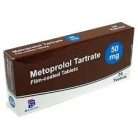
Metoprolol Tartrate / Succinate – Technical Information (Reference Only)
Chemical Information
-
Synonyms:
• Metoprolol tartrate
• Metoprolol succinate (extended-release)
• Lopressor, Toprol-XL (brand names) -
Formal Name:
(RS)-1-(Isopropylamino)-3-[4-(2-methoxyethyl)phenoxy]propan-2-ol tartrate / succinate -
CAS Numbers:
• Metoprolol tartrate: 37350-58-6
• Metoprolol succinate: 37350-59-7 -
Molecular Formula:
• Tartrate: C15H25NO3·C4H6O6
• Succinate: C15H25NO3·C4H6O4 -
Molecular Weight:
• Tartrate: ~ 684.8 g/mol
• Succinate: ~ 492.6 g/mol -
Chemical Class:
Beta-1 selective adrenergic receptor blocker (beta-blocker) -
Appearance:
White crystalline powder
Structural / Spectral Information
-
SMILES (tartrate):
CC(C)NCC(COC1=CC=C(C=C1)OCC)O.C(C(C(=O)O)O)C(=O)O -
InChI (tartrate):
InChI=1S/C15H25NO3.C4H6O6/... -
InChI Key (tartrate):
NSVYRLHTSGFPGS-UHFFFAOYSA-N -
λmax (UV):
~ 275 nm (varies by solvent)
Solubility
-
Water: Freely soluble (tartrate and succinate)
-
Methanol / Ethanol: Soluble
-
DMSO: Soluble
-
Chloroform / Ether: Practically insoluble
Formulation
-
Supplied as Metoprolol tartrate or succinate USP/EP grade
-
Purity: ≥98% (research/analytical grade)
-
Common pharmaceutical tablet strengths:
• Immediate release (tartrate): 25 mg, 50 mg, 100 mg
• Extended release (succinate): 25 mg, 50 mg, 100 mg, 200 mg
Storage & Stability
-
Storage Temperature: 20–25 °C (room temperature)
-
Shipping: Ambient temperature acceptable
-
Stability: ≥3–5 years when stored dry and protected from light
Safety / Handling
-
Low acute toxicity
-
Avoid inhalation of powder
-
Use PPE (gloves, mask) when handling bulk material
-
Protect from moisture
Be the first to review “Metoprolol”
Related products
-
Original price was: $135.$125Current price is: $125.
-

-
Original price was: $160.$100Current price is: $100.
-
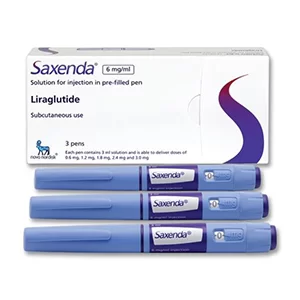
Saxenda (liraglutide) 6mg/mL – 5 Pens
Original price was: $665.$631.75Current price is: $631.75. -
Original price was: $155.$140Current price is: $140.




Reviews
There are no reviews yet.