
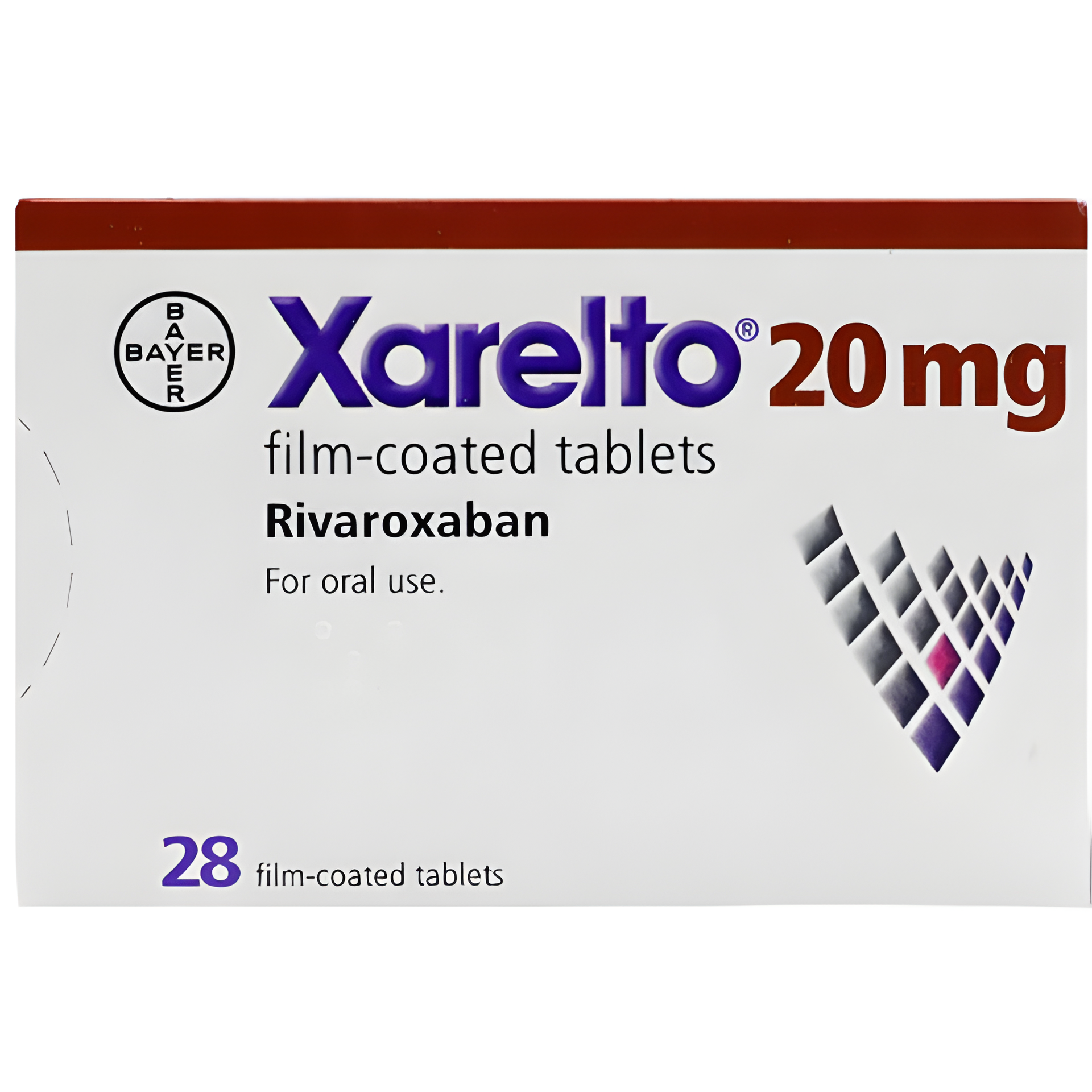
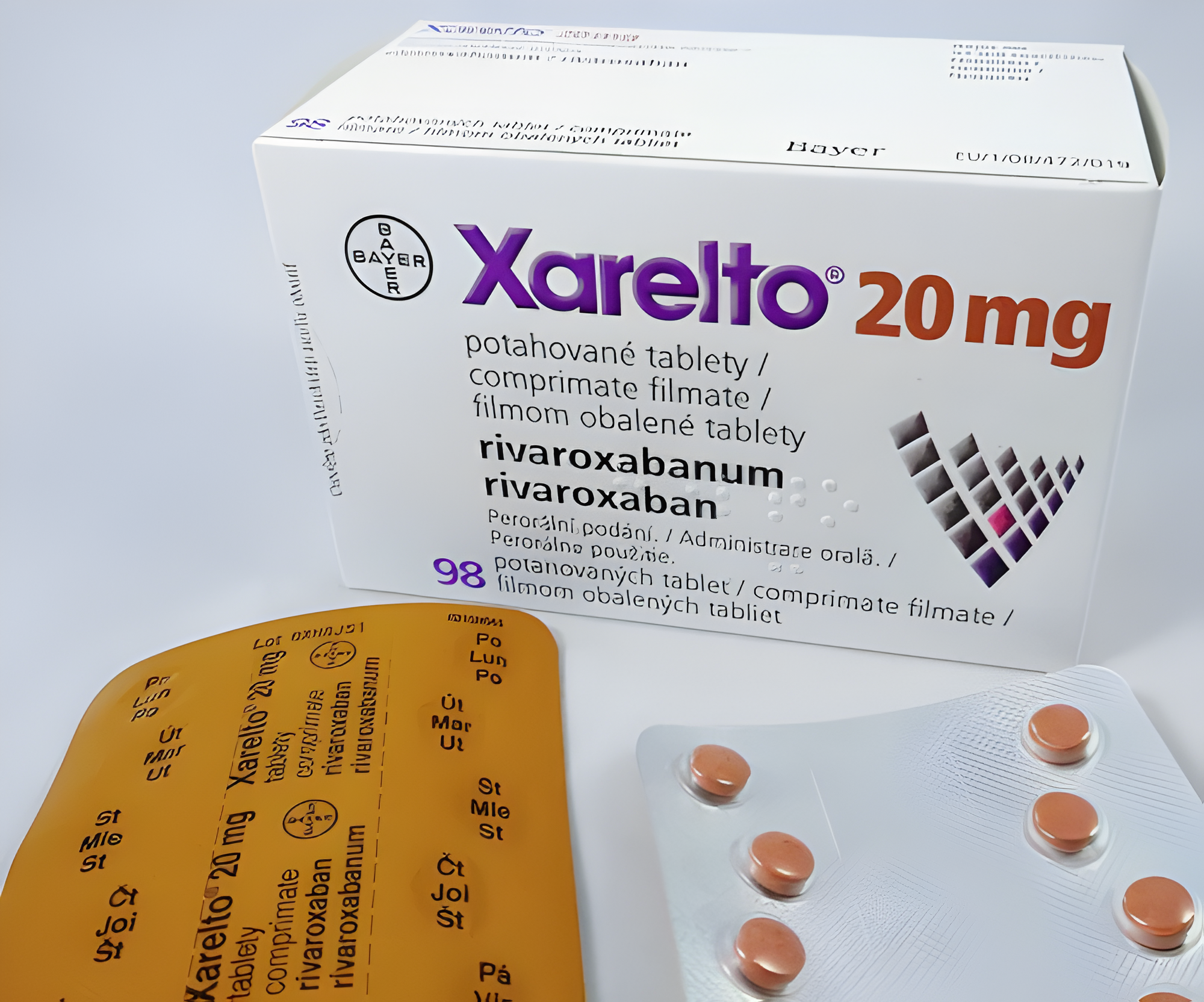
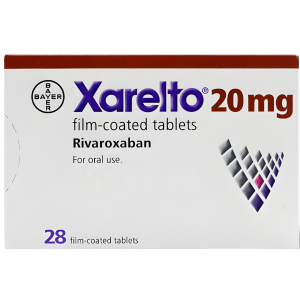
Xarelto
Xarelto (rivaroxaban) is an oral blood thinner used to prevent and treat blood clots, including deep vein thrombosis, pulmonary embolism, and stroke risk in atrial fibrillation. Patients should follow prescribed dosing, take higher doses with food, and be aware of bleeding risks while monitoring for side effects carefully.
- Estimated Delivery : Up to 4 business days
- Free Shipping & Returns : On all orders over $200
Product Information:
-
Xarelto (rivaroxaban) is a blood thinner (anticoagulant) used to prevent and treat blood clots.
-
Common uses include:
-
Preventing stroke in atrial fibrillation
-
Treating deep vein thrombosis (DVT) or pulmonary embolism (PE)
-
Reducing the risk of recurrent blood clots
-
How to Take Xarelto
-
Form: Oral tablets
-
Dosing: Depends on the condition; commonly once or twice daily. Follow the exact prescription.
-
With food:
-
Take higher doses (15 mg or 20 mg) with food for better absorption
-
Lower doses (like 10 mg) can be taken with or without food
-
-
Consistency: Take at the same time each day
-
Missed dose:
-
If you miss a once-daily dose, take it as soon as possible.
-
If you miss a twice-daily dose, follow your doctor’s instructions—do not double doses.
-
Xarelto side effects:
Call your doctor or get emergency medical help if you notice any signs of an allergy from Xarelto:
hives, trouble breathing, swelling of your face, lips, tongue, or throat.
Rivaroxaban may make you more likely to bleed. Call your doctor right away if you notice any of the following:
bruising or bleeding that doesn’t stop (nosebleeds, gum bleeding, or heavy periods);
pain, swelling, new drainage, or bleeding from a wound;
Headaches, dizziness, weakness, or a sensation of possibly fainting;
urine that is reddish, pink, or brown; or
bloody or tarry stools, coughing up blood or what looks like coffee grounds.
Common Xarelto side effects:
bleeding;
vomiting;
cough; or
stomach or gut inflammation.
Warnings:
Don’t quit taking Xarelto without consulting your doctor. Suddenly stopping the intake of Xarelto is likely to increase the risk of developing blood clots or stroke. Certain medications may increase your risk of bleeding when taken with Xarelto. You should inform your doctor of any medications you are using. If you or your child notice any of the following signs of bleeding, you should call your physician immediately: Headaches, Feeling weak or dizzy, Bleeding from the gums, Nosebleeds, Vaginal bleeding or heavy periods, Blood in your urine, Blood in your stools or black stools, Vomit that looks like coffee grounds, or any type of bleeding that does not stop. Xarelto may cause a severe blood clot to form around your spinal cord if you have a spinal tap or spinal anesthesia (epidural). Inform any physician who attends you that you are taking Xarelto.
Be the first to review “Xarelto”
Related products
-
Price range: $6.65 through $14.25
-
Buy Eliquis (Apixaban) 5mg Tablets, Available in stock!
Original price was: $230.$199Current price is: $199. -


-
Eliquis (Apixaban) 5mg Tablets
Original price was: $230.$199Current price is: $199. -
 $75
$75


Reviews
There are no reviews yet.